Furnace Not Turning On? Checks Before You Call in Delaware
Before calling for service, check the thermostat setting and batteries, the furnace power switch, the breaker …
Learn more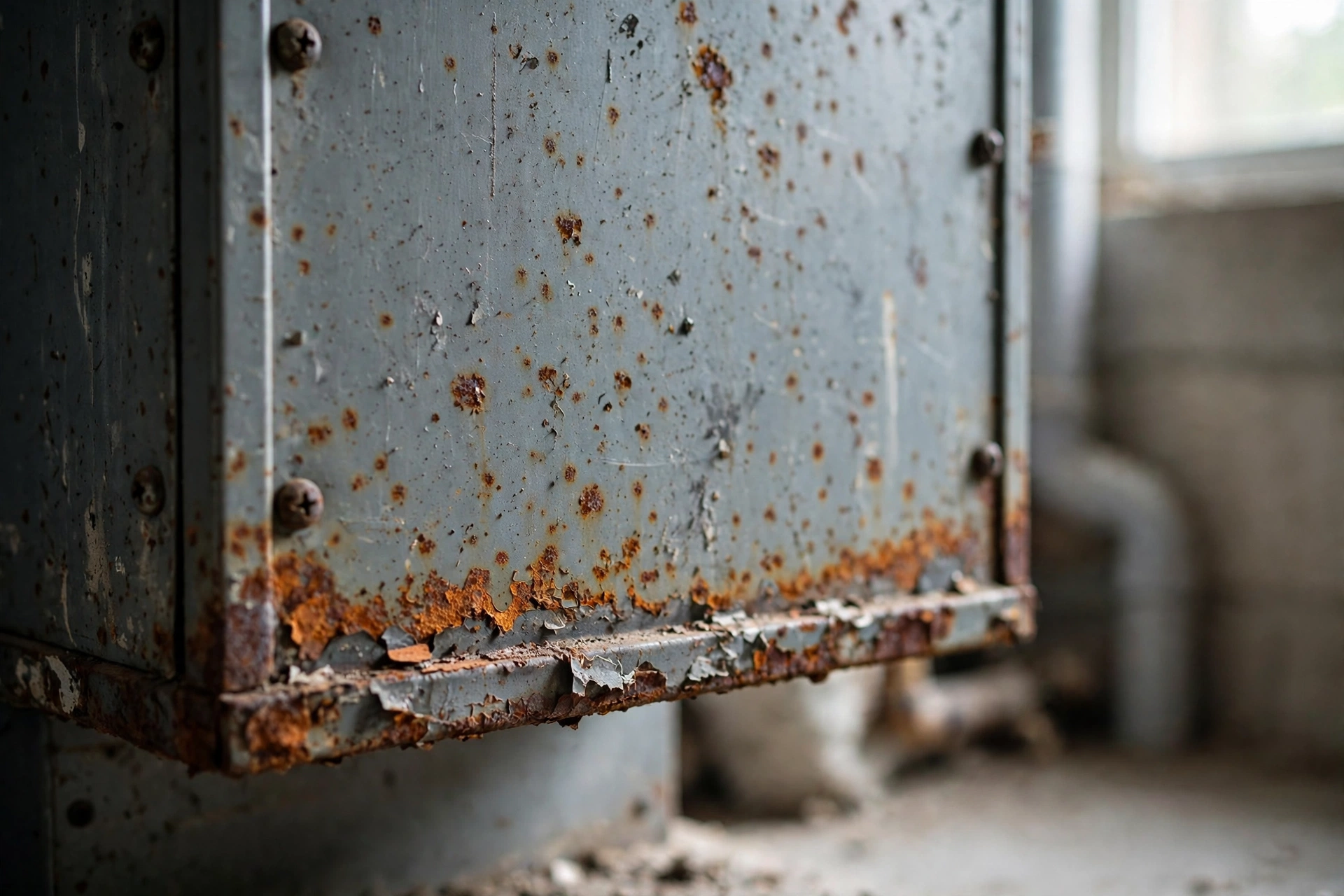
Your furnace works hardest from December through March, but the damage that causes fall breakdowns often happens in July. While the system sits quiet through a Delaware summer, warm humid air drifts through the cabinet, and in coastal towns that air carries salt. Metal does not need much encouragement. Given a whole off-season, it rusts.
This is not a theoretical worry. Technicians opening furnaces in Lewes and Rehoboth Beach each fall find the same pattern: surface rust on burner assemblies, corrosion on electrical terminals, and flue pipes roughened by a summer of condensation. Inland homes get it too, just slower. Anywhere in Delaware, the six months your furnace rests are the six months it is most vulnerable.
The good news is that off-season rust is one of the most preventable furnace problems. A little attention at the right time stops nearly all of it. This guide explains where rust strikes, what you can check yourself, and what a fall tune-up does to protect the system before heating season.
Salt does not need an ocean view to find your furnace. Coastal breezes carry fine salt spray miles inland, and it settles on everything, including the air your furnace breathes. Every time the blower ran last winter, it pulled that air through the cabinet. When the system shuts down for summer, the salt stays behind on the metal, waiting for humidity.
Salt is hygroscopic, which is a technical way of saying it pulls moisture out of the air. A salt-flecked burner assembly in a humid basement or crawl space stays microscopically damp all summer, and damp steel rusts far faster than dry steel. Homes within a few miles of the Delaware Bay or the Atlantic see this most, but summer humidity alone does real damage even in Dover and Middletown.
The furnace location matters too. Units in crawl spaces and damp basements live in the most corrosive air in the house. A furnace in a dry, conditioned utility room weathers the off-season far better than one sitting over bare earth in a vented crawl space.
Delaware summers are humid, and humidity is rust's other ingredient. Warm air holds more moisture, and when that air contacts the cooler metal inside a furnace cabinet, condensation forms. It does not take puddles. A thin film of moisture on steel, renewed daily all summer, is enough.
The worst spot is often the flue. After the last heating cycle of spring, residual moisture sits in the vent pipe. Through summer, humid air moves in and out with temperature swings, and the inside of the flue corrodes from the top down. By fall, the pipe can be rough and flaking where it was smooth in April.
This is also why a furnace that ran perfectly in March can fail its first startup in October. Nothing broke over the summer. The metal just spent six months quietly degrading, and the first cold night asks weakened parts to work at full load.
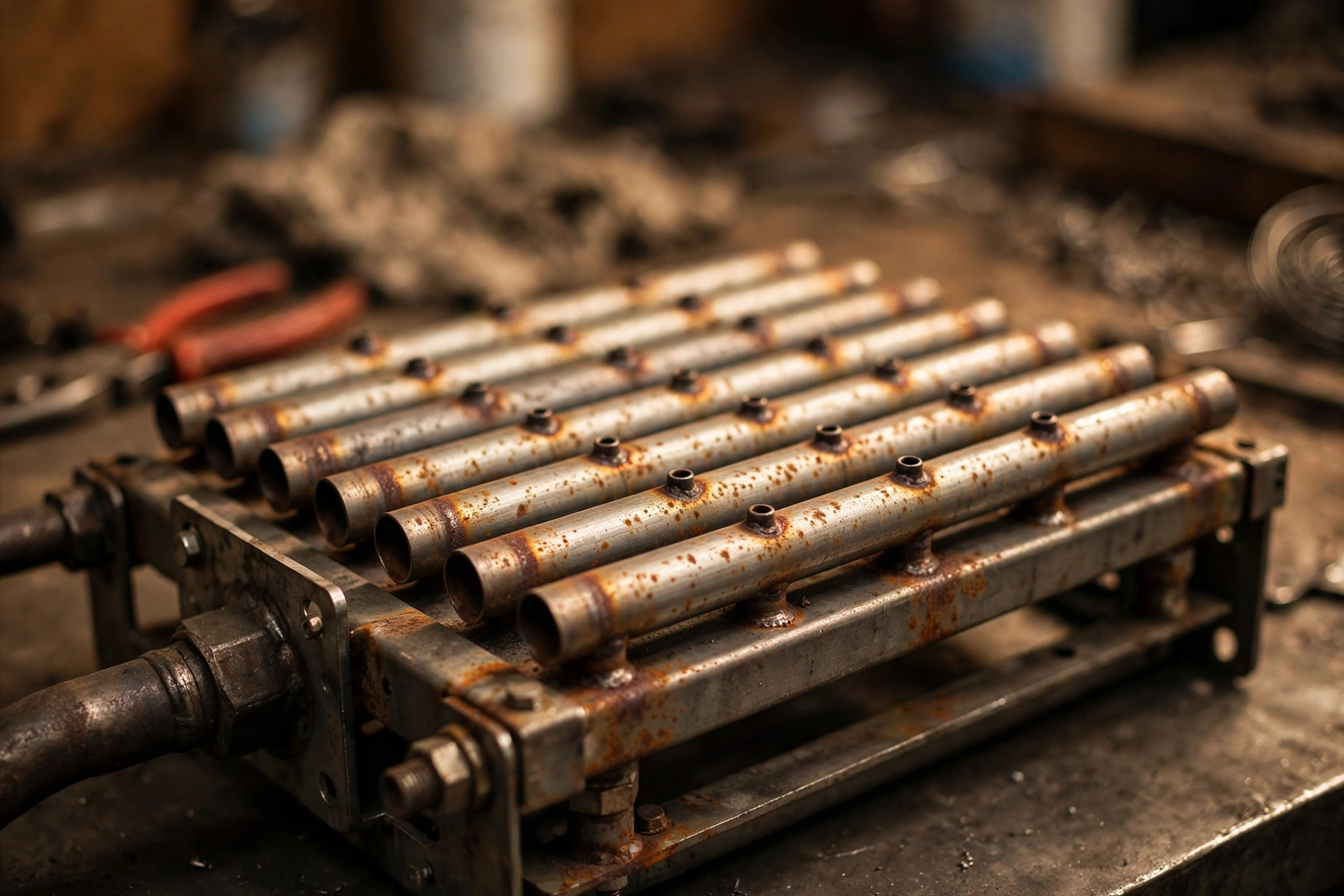
Rust attacks in a predictable order, starting with the thinnest and most exposed metal. Burner assemblies go first: they are thin steel, they sit in the airflow path, and heat cycling has already stressed them. Surface rust on burners changes how flames form, which is one reason a furnace can run rough after a humid summer.
Electrical terminals and connections come next. Corrosion on a terminal adds resistance, which means heat at the connection and intermittent faults that look like control board problems. Many mysterious fall no-starts trace to a corroded connection, not a failed part.
The cabinet itself rusts from the bottom up, especially where it meets a damp floor. Cabinet rust is usually cosmetic at first, but it signals the conditions inside. And the heat exchanger, the part you most want intact, can develop surface corrosion that a technician needs to distinguish from dangerous thinning. That distinction is inspection work, not guesswork.
You can do a useful visual check without opening anything you should not. With the furnace off, look at the cabinet exterior for new rust spots, especially along the bottom edge and around the burner compartment door. Peek at the flue pipe where it leaves the furnace for flaking or white powdery deposits, which signal corrosion.
Check the area around the furnace. If the basement or crawl space smells musty or shows standing dampness, the furnace is breathing that air all summer. A dehumidifier in the space, or simply better drainage and ventilation, protects the furnace along with everything else down there.
Do not remove panels or touch burners, wiring, or gas parts. The visual check is about spotting trouble early, not fixing it. Anything beyond looking is a job for the fall service visit, when a technician opens the cabinet properly and knows what the corrosion is telling them.
A fall tune-up is where prevention actually happens. The technician cleans the burner assembly, removing the surface corrosion before it affects flame quality. Electrical connections get inspected, cleaned, and tightened, which ends the intermittent faults before they start. The flue gets checked for the summer's damage, and the heat exchanger gets the careful look that separates surface rust from real thinning.
Just as important, the visit establishes a baseline. A technician who sees your furnace every fall knows what normal looks like for your unit, so the first sign of accelerating corrosion gets caught a year before it becomes a failure. That is the whole value of the annual rhythm: small findings, handled early, instead of October surprises.
For coastal homes, mention the salt air when you book. A technician who knows the unit sits near the coast will pay extra attention to the burner and electrical compartments and may suggest practical steps like better space ventilation. It is a small detail that changes what gets inspected.
Most off-season corrosion is maintenance territory: clean it, protect it, monitor it. But rust sometimes crosses the line. A flue pipe corroded through needs replacement, not cleaning. Burners pitted deeply enough to distort the flame need replacement. And any heat exchanger corrosion beyond light surface rust needs evaluation, because that part guards your breathing air.
Age decides a lot here. Surface rust on a ten-year-old furnace is a maintenance note. The same rust on a twenty-year-old furnace with a thin service history may be the sign that the replacement conversation should start. Our guide to heat pumps switching to emergency heat is worth reading if your winter setup is changing too.
The rule is simple: rust you can see on the outside deserves a professional look at the inside. Do not wait for the first cold night to find out what the summer did. If your furnace has not been serviced since spring, schedule the fall visit now, while there is still time to fix what the off-season started.
Read the guide, then describe your furnace problem and we will help arrange the next step.
Before calling for service, check the thermostat setting and batteries, the furnace power switch, the breaker …
Learn more
Fall furnace maintenance means changing the filter, testing the heating cycle before cold weather arrives, cle…
Learn more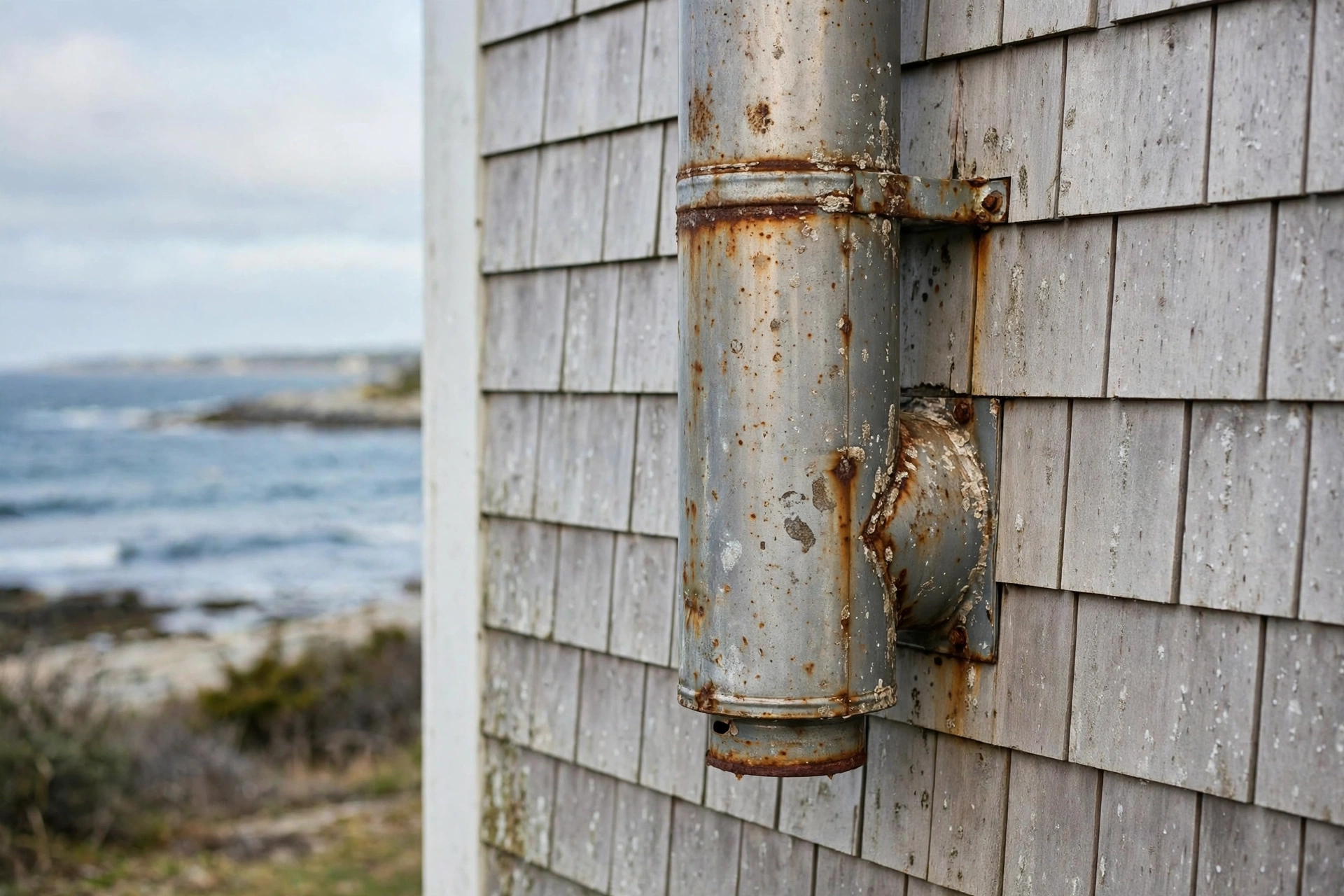
Coastal salt air accelerates rust and corrosion on furnace metal parts, and year-round Delaware humidity adds …
Learn more